
You’ve probably had this thought before: “Maybe I should talk to someone.”
But what kind of someone? There’s therapy, there’s “CBT,” there’s treatment—how do you even begin?
If you live in Dorchester and you’re struggling with patterns you can’t seem to break—whether it’s using, spiraling, isolating, or just stuffing it all down—understanding the difference between CBT and traditional talk therapy can help you take a clearer first step.
At MassBay Behavioral Health we offer both types of care and can help you figure out which one fits.
What Is “Talk Therapy” Exactly?
Let’s start with the most familiar: talk therapy (also called “psychotherapy”) is what most people picture when they think about seeing a therapist.
You talk. They listen. They ask thoughtful questions. You unpack your past and present, gain insight into patterns, and build a therapeutic relationship that helps you feel safe enough to be honest.
Talk therapy can be powerful—especially if you’ve never had a space where you were allowed to speak without judgment or interruption.
But for some people—especially those dealing with addiction, impulsive behaviors, or overwhelming emotions—insight alone isn’t enough.
How CBT Works (and Why It’s Different)
CBT (Cognitive Behavioral Therapy) is more structured than traditional talk therapy. Instead of just exploring why you feel or act a certain way, CBT helps you figure out what to do differently—and how.
You’ll learn how to:
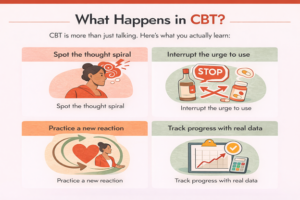
- Catch the self-sabotaging thoughts that lead to using, isolating, or lashing out
- Practice skills to interrupt destructive cycles
- Replace shame spirals with concrete tools
Think of CBT like a workout for your brain: it trains you to respond differently, not just reflect. That’s why it’s a gold-standard approach for addiction, anxiety, depression, and trauma recovery.
CBT Isn’t “Less Deep.” It’s Just More Directed.
Some people worry CBT will feel robotic or surface-level. Not true.
Our CBT therapists don’t ignore your past or emotions—they help you translate them into practical change. CBT is ideal if:
- You know what your patterns are but can’t seem to break them
- You’ve done therapy before but felt stuck
- You want to feel better and function better, not just understand why you struggle
It’s emotional. It’s honest. And it doesn’t waste your time.
So… Which One Do You Need?
There’s no single right answer. It depends on what you’re dealing with and how ready you are to take action.
If you’re overwhelmed, raw, or not sure what you need? Talk therapy can help you feel seen, heard, and stabilized.
If you’re ready to work on specific behaviors or change how you respond to life? CBT might be the better starting point.
Many clients start with one and move to the other. Some combine both. That’s something we can figure out together.
What Therapy Looks Like in Dorchester
No clipboard stares. No judgment. No clinical coldness.
Our therapists in Dorchester work with real people—people who are struggling but still showing up. You don’t need a diagnosis or a crisis to get help. You just need a little willingness and someone who knows how to guide you through it.
And whether you start with CBT therapy or talk therapy, you’ll be stepping into real, evidence-based care in Dorchester that meets you where you are.
Therapy Isn’t Magic—But It’s a Damn Good Start
You don’t have to “be ready.” You don’t have to be perfect. You just have to be curious enough to try.
📞 Call (617) 207-2074 to learn more about our CBT services in Dorchester. We’ll help you figure out what fits.